

 Janine Griffiths
A woman who has spent nearly her entire life in the grip of sickle cell disease has opened up about the relentless pain that has shaped every part of her world.
For Soleme Mealin, the condition has meant decades of agony, isolation and fear, yet also a determination so fierce that she has raised three children and pursued a PhD despite enduring chronic pain.
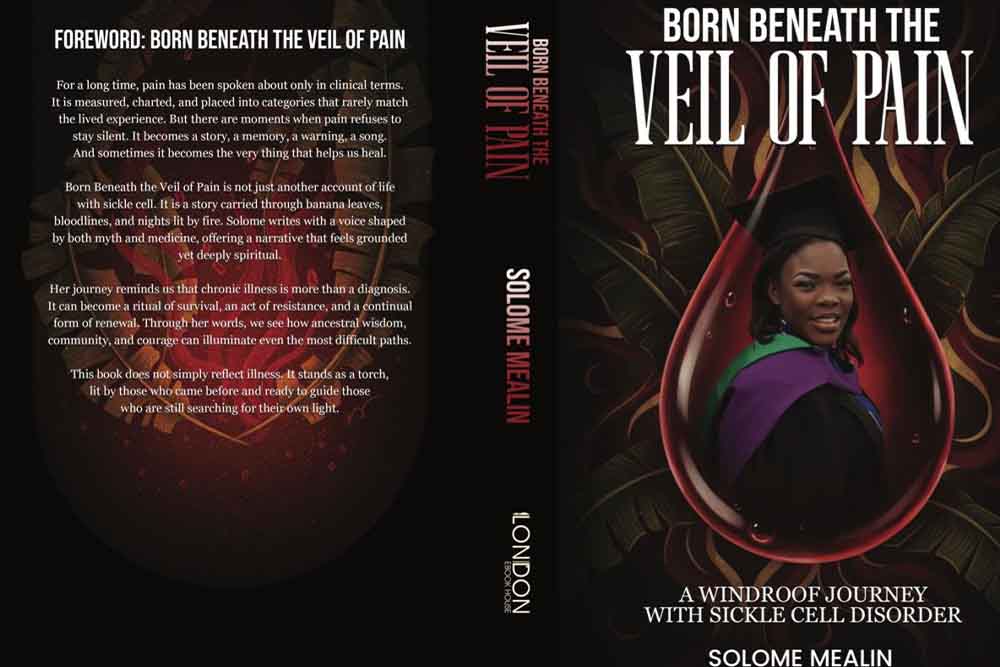
Her journey inspired her to write a book called ‘Born Beneath The Veil of Pain’ for younger people facing the same diagnosis.
“I’ve gone through hell on earth”, she said, adding: “But through my illness I’ve managed to push myself and I’ve learned not to feel sorry for myself. I’ve learned to carry on,” she said.
For her, sickle cell has never been just one symptom. Over the years it has slowly and systematically destroyed her joints, caused crippling fatigue, burning skin pain, swelling, blood transfusions and chronic crises that can strike without warning.
“It makes you feel like you’re 90 years old when you’re 40,” she said.
What is sickle cell anemia?
Sickle cell anaemia is an inherited blood disorder where the body makes unusually shaped red blood cells. Instead of being round and flexible, the cells become stiff and curved. This makes it harder for them to move through blood vessels, which can block circulation and cause sudden episodes of severe pain, known as a ‘sickle cell crisis.’
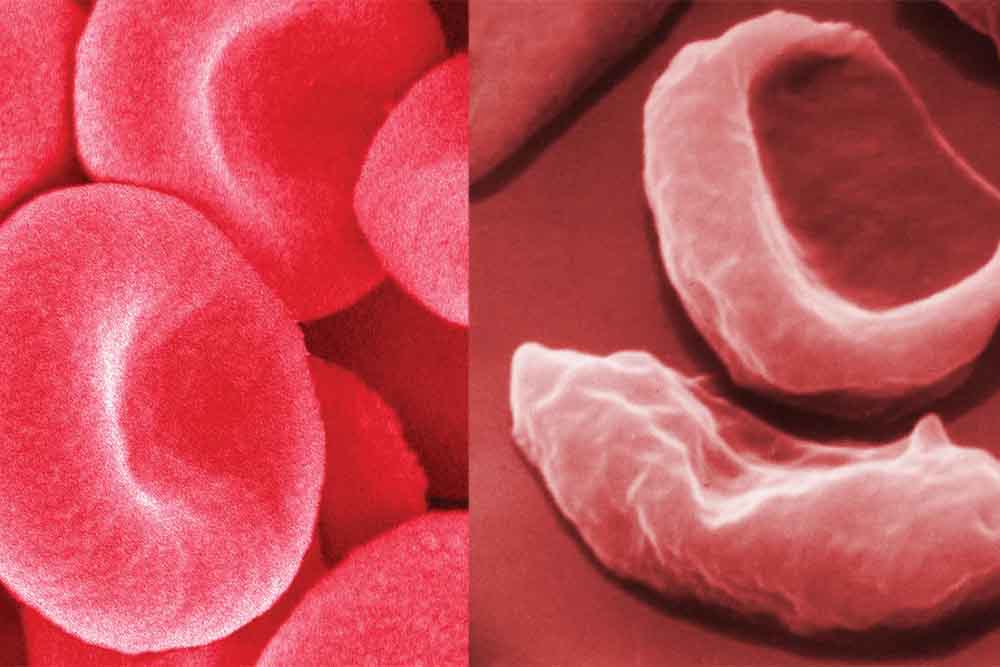
It can also leave people tired or more prone to infections because their bodies don’t get enough oxygen. Crises can last from a few hours to several days and often require strong pain relief, hydration and sometimes hospital care. They’re unpredictable, and many people live with the worry of not knowing when the next one will happen, which adds to the condition’s day-to-day strain.
The condition mainly affects people whose families come from Africa, the Caribbean, the Middle East and parts of India, and it lasts a lifetime, though treatment helps people manage its impact.
How is it treated?
People with sickle cell anaemia usually follow a mix of treatments that help prevent complications and reduce painful episodes. Many take daily medication such as hydroxycarbamide, which helps the body make healthier red blood cells and lowers the risk of crises. Antibiotics and vaccinations are important because the condition makes infections more likely. When someone has a severe episode or very low blood counts, doctors may give a blood transfusion to boost oxygen levels and ease symptoms. Pain relief is also a major part of day-to-day management.
Challenging misconceptions
What Soleme wants people to understand most is that the illness reaches far beyond what many assume.
“You’re forever in pain,” she said. “You actually need help with your mental well being.”
Soleme said that at times, even healthcare professionals lacked awareness about her condition and the severity of the pain she was in.
She explained: “Sometimes that pain comes and you can’t even talk. It’s just your tears that talk. When I’m in hospital or ER nurses always say ‘oh you can’t be in that much pain. I don’t know why you’re crying like that.’
“And yet while they’re saying that, I’m holding onto the bed and feel like I’m dying. It boils my blood.”
That silence around the full reality of the condition is what pushed her to write her book.
She said she wanted younger people to have something she never had growing up: a voice telling them they are not alone.
“For me, I never got to learn from anyone,” she said. “No one ever told me anything about sickle cell. I’ve got to teach myself to live with it.”
The book, written over two and a half years, became both an act of advocacy and survival.
“When I feel bad, when I’m in pain in my bed, I just turn to my phone and write,” she said. “Writing helps me not to concentrate so much on the pain.”
A fatal crisis
The emotional core of her story lies in the moments when sickle cell nearly took everything from her.
“I always tell fellow warriors never to live alone, because it is very dangerous. I know that in life sometimes that’s what it chooses for you, but try not to live alone, because I tested it. I almost died in my room.”
Her arm had locked and it cramped in agony rendering it bent and unusable. She had collapsed to the floor in a crisis of severe pain which was so overwhelming she could not reach the phone lying nearby. Instead she was forced to remain motionless on the floor, unable to move very far while writhing in pain.
“The phone was there and I couldn’t even reach it,” she said. “I couldn’t move. I thought I was going to die alone,” she said.
She was eventually found by the person she was renting from, who took her to hospital.
Access to healthcare
Her reflections are also shaped by her experiences growing up in Uganda, where access to healthcare was far more limited.
“I always look at the differences between the two healthcare systems,” she said. “People here complain a lot about the NHS, but they don’t know they are sitting on gold.”
She described a system in Uganda where treatment often depended entirely on whether patients could afford it.
“If you don’t have money, you can’t talk to a doctor. Also if you don’t have money to give an ambulance, they cannot come for you.”
Having lived with sickle cell in both countries, she said the contrast is stark: “In the UK, yes, some people may not understand my pain, but I get the help I need.”
Even when faced with disbelief or delays, she said the ability to be heard makes a crucial difference.
“I can talk and say I’m dying of pain and someone would eventually listen,” she said. “Back home, it’s money that talks, not your mouth.”
“Never give up”
Yet even in the face of relentless pain, she refused to surrender her ambitions.
Told at times that she might never achieve the life she wanted, she pushed herself through university, then a master’s degree in public health, and finally a PhD focused on African migrant women and mental health.
She is currently waiting to learn whether she has passed.
“If I pass this PhD, I want to do research in sickle cell. I’ll also continue writing, because my story is not finished.” she said.
She also went on to have 3 children despite being told that she would never be able to do so.
“Find your comfort spot and do what you love.”
Perhaps the most powerful part of her testimony is the message she has for young people living with the disease.
“There is something you’re good at, and there’s something you love. Find your comfort spot, and do what you love. Never say, ‘I can’t do this because of sickle cell’. You can get around everything. You may not do it like other people, but you can reach your goals eventually because Rome wasn’t built in one day. That’s how I’ve done it.”
Despite the severe pain and challenges she faces, she has refused to let the illness define her.
For her, sickle cell has changed the pace of life, but not its possibilities.
And that, she hopes, is what readers will carry with them.
“I talk to many younger people, and sometimes they give up,” she said, adding: “I don’t want them to give up. Do anything that you like. Technology today is taking us to a different world. Please use it. Use it to do things you like. It’s not the end of the world. We need to create awareness about sickle cell, because it’s needed.” she said.
Support independent community journalism!
East Side Story covers the people, places and stories in Leeds that are too often overlooked. While national headlines chase conflict and clickbait, we focus on real communities and the issues shaping daily life in East Leeds.
Divisive content, AI noise and online rumours spread faster than ever. At the same time, many mainstream outlets are stretched and rarely spotlight the community organisations and local champions who deserve recognition.
East Side Story was created to change that. We answer only to our readers. We have no corporate owners or billionaire funders. Our journalists report freely, ask difficult questions and hold power to account.
Your support helps us keep this work going. Monthly contributions make the biggest impact because they allow us to invest in deeper reporting and fearless local journalism.
Supporters also receive exclusive updates, behind the scenes insights and other benefits as a thank you for keeping independent journalism alive.