

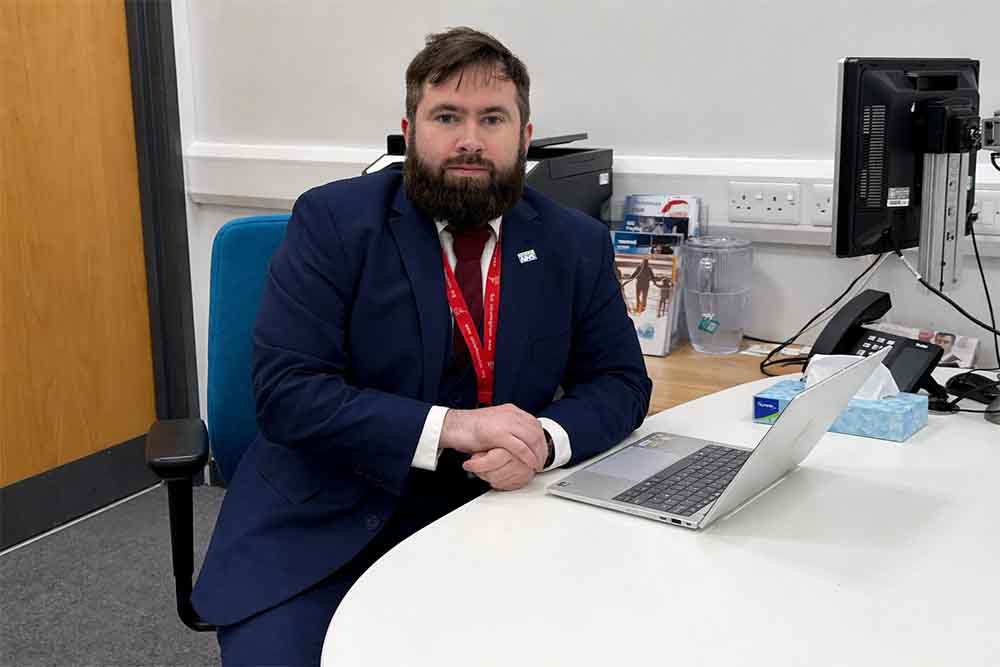
 Janine Griffiths
He has spent two years chairing one of Leeds’ most diverse community committees, and six months as chief whip keeping the city’s Labour group in line.
Now, as Councillor Luke Farley prepares to step down from his community committee role, he has spoken to East Side Story on the challenges nobody prepares you for.
As Chief Whip, Farley describes himself as a “jack of all trades,” and explained that his power is rooted in conversation rather than command. “Part of my role is to manage the group and ensure that decisions are abided by, but it is a collective and nobody can really tell you what to do when you are an elected member. As chief whip, I’ve got to try and make sure everyone keeps on the same page. So a lot of it is about persuasion.”
While he is stepping back from his Inner East Community Committee responsibilities, his role as Chief Whip is continuing as normal.
Every councillor’s job is to stand up for their own ward. That means dealing with local problems, whether it is fly tipping, poor transport links or ongoing issues like dog fouling, and making sure residents’ concerns are heard when decisions are being made.
But the Inner East Community Committee is designed to go a step further. It brings councillors from several East Leeds wards together to look at the bigger picture and decide how to tackle problems that are not unique to one place. Instead of each ward working on its own or even worse – in competition with each other, the committee focuses on shared issues and agrees joint priorities, funding and action across the area.
Farley says this matters because many of the problems residents face are not isolated. Issues like dog fouling and fly tipping are being seen in multiple neighbourhoods, including Seacroft, Gipton and Harehills. By bringing these experiences together, councillors can see patterns more clearly, share what is working in different areas and make better use of limited resources. While focusing on one ward at a time can bring quick fixes, it often just pushes the problem down the road into nearby streets.
A joined-up approach, Farley argues, solves these issues at its root by treating them as area-wide challenges rather than one-off complaints.
In simple terms, the committee is about working together rather than in silos, so decisions are fairer, resources go further and no single neighbourhood is left carrying the burden alone.
As chair of the Inner East Community Committee, Farley helped to lead those discussions and bring councillors together to agree on shared priorities for the area.
However, now as he prepares to retire that part of his role, he reflects on the last two years as chair.
“It is about how you can best serve the community that you’re there to represent. I’ve done everything that’s been in my ability and where people suggested things, I’ve taken that on board, and responded accordingly.”
When he first took the chair in 2024, he said that attendance at the quarterly committee meetings was fairly low and struggled to get high levels of engagement.
So he decided to make them more practical and themed them around the issues residents actually raised. Instead of vague discussions, four subgroups were created: environment, police and community safety, adults and health, and children’s services with clear objectives set at the start of the year.
Looking back, he says the work has been less about grand gestures and more about strengthening the way the committee operates day to day.
He added: “This year, I think it’s been about steadying the shift and helping to embed the subgroup approach to how we do things, and actually being able to set those objectives and then see delivery on the back of them. It means it’s not just a talking shop, and people can see that their councils are actually doing things and delivering on the objectives we set out.”
As his time chairing the Inner East Community Committee ends, Farley noted. “I’m proud of what I’ve achieved. My role was to listen to what other people have to say and the ideas that they have.”
There was never an instruction manual, he added, but the drive to listen to both councillors and residents to deliver on promises has been constant.
However, his most important priority is to oversee decisions that help to make East Leeds a better place to live and serve the people he was elected to represent: “My number one priority is to think of ways I can best serve the community that I’m there to represent and being happy to learn as I go along.”
Whether as community committee chair or Chief Whip, that is the thread that runs through everything he does.
Support independent community journalism!
East Side Story covers the people, places and stories in Leeds that are too often overlooked. While national headlines chase conflict and clickbait, we focus on real communities and the issues shaping daily life in East Leeds.
Divisive content, AI noise and online rumours spread faster than ever. At the same time, many mainstream outlets are stretched and rarely spotlight the community organisations and local champions who deserve recognition.
East Side Story was created to change that. We answer only to our readers. We have no corporate owners or billionaire funders. Our journalists report freely, ask difficult questions and hold power to account.
Your support helps us keep this work going. Monthly contributions make the biggest impact because they allow us to invest in deeper reporting and fearless local journalism.
Supporters also receive exclusive updates, behind the scenes insights and other benefits as a thank you for keeping independent journalism alive.





Fantastic helpful article, helps explain and demystify local politics