

 Janine Griffiths
What happens when you give young people the skills and freedom to choose the stories that matter to them?
For three East Leeds students, it meant turning their curiosity, concerns and personal experiences into stories they wanted others to read.
Three young East Leeds writers have put their new journalism skills into practice, tackling subjects ranging from road safety and artificial intelligence to a serious incident within their own community.
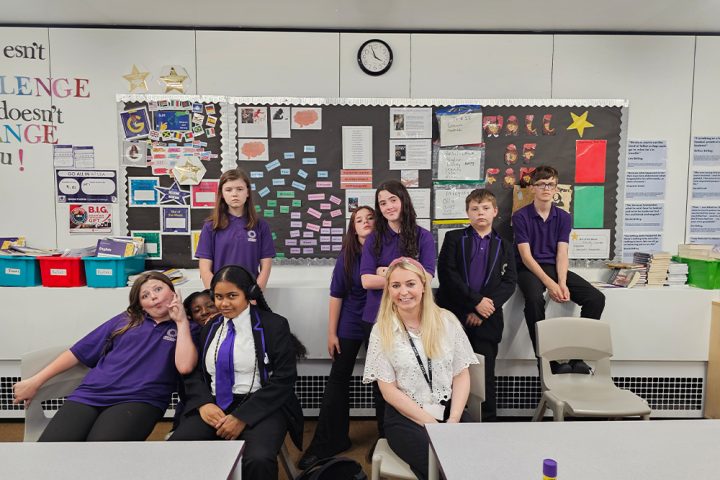
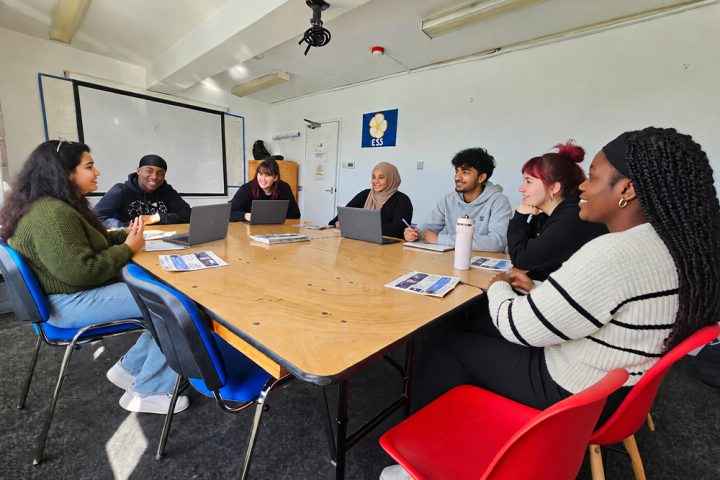
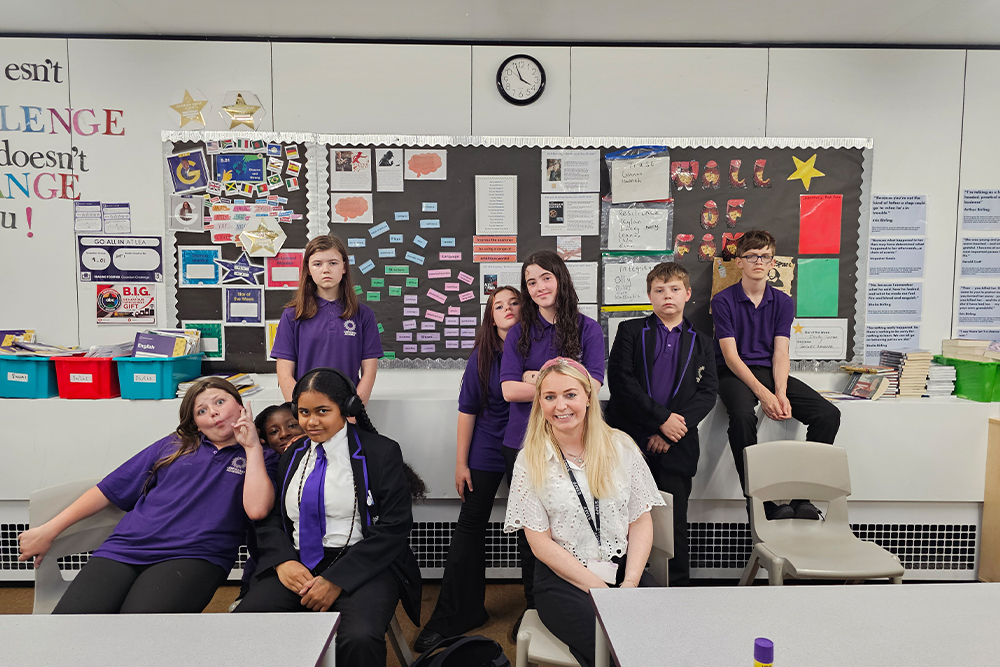
The young writers took part in East Side Story’s six-week journalism programme at Leeds East Academy earlier this year, while studying in Years 7 and 8.
During the programme, they learned about writing, interviewing, research, photography, podcasting and media law.
But one of the most important parts of the course was giving the young people the freedom to decide what they wanted to say.
Students discussed issues in the news, explored subjects that interested them and were encouraged to develop their own ideas for stories. The results show just how different those interests can be.
Tyler Waddington, 13, chose road safety and questioned why people continue to take risks behind the wheel. His piece explores drink driving, unlicensed drivers, technology in cars and road safety in Seacroft.
Yvonne Olowofoyeku, 12, turned her attention to artificial intelligence. Rather than arguing simply for or against it, she explored what she sees as the benefits and drawbacks of a technology increasingly becoming part of everyday life.
For 13-year-old Daisy Haigh, inspiration came from much closer to home.
After reading reports about an alleged sexual assault involving two teenage girls in Seacroft, Daisy wrote a personal response exploring the questions the case left her asking and her feelings for the young people involved.
Their subjects and writing styles are very different, but all three pieces demonstrate something East Side Story wants to encourage through its journalism workshops: young people thinking about the world around them, asking questions and having the confidence to express their views.
Below are Tyler, Yvonne and Daisy’s pieces in their own words.
Car safety: Why Risk Your Life on the Road?
Tyler Waddington, 13
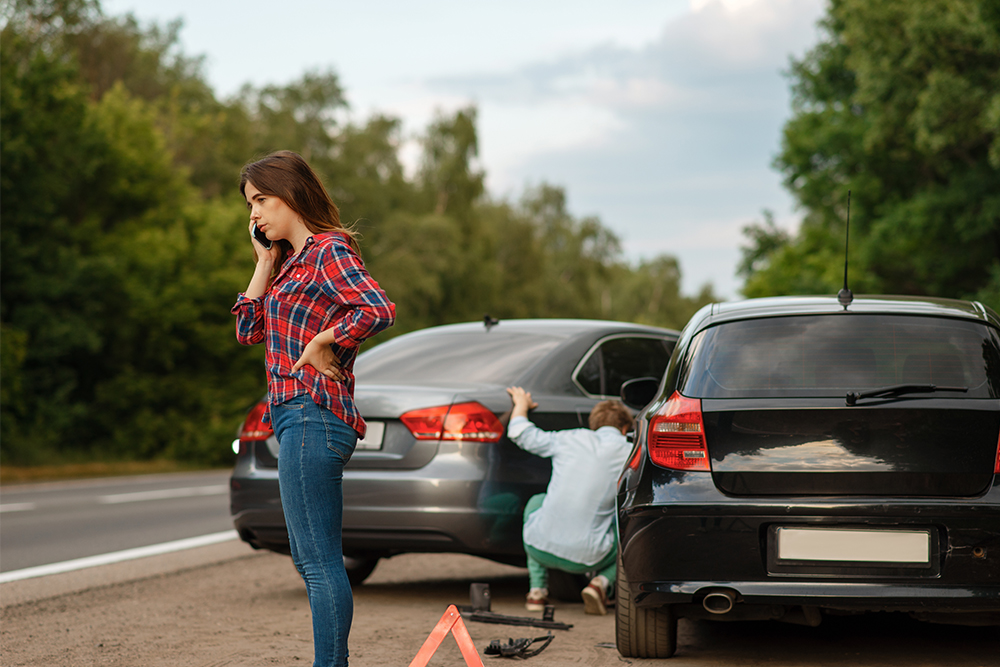
Why would you risk your life in a car when there are way more ways to be safe? I want to talk about the risks of cars, especially careless, inexperienced and irresponsible drivers. Did you know that many car collisions are caused by intoxicated drivers who drink and drive?
Government statistics revealed that alcohol was recorded as a factor in 9% of fatal or serious collisions where road-safety considerations were recorded.
These people are a huge risk to our society because they usually crash and cause people to get hurt or severely paralysed. The worst case scenario could even lead to the death of a loved one.
Another reason is A.I It is a type of technology that can be used in cars to help with things like steering, braking and detecting what is happening on the road. However, these systems can sometimes make mistakes or malfunction. Wouldn’t that be a catastrophe?
Furthermore, if the technology fails, it could potentially lead to dangerous situations, such as a crash or the car moving in an unexpected way. It can also raise difficult questions about who should be responsible if something goes wrong, whether that is the driver, the manufacturer or the company behind the technology.
Also, did you hear about underage and unlicensed drivers? These are underage people who drive even though they’re young. Unlicensed drivers drive without a license and this is also disgraceful! Now, let’s talk about ways to stay safe. One way to stay safe is to use a seatbelt in case of a crash and a seatbelt will save your life.
This is why the DVLA urges you to be safe and careful. It is a weapon you are driving, so you must be responsible. Make sure you’re sober and have a good night’s sleep because it’s important to have a clear, focussed mind on the road.
In Seacroft, 87 people were killed or seriously injured, including three fatalities between 2021 and 2025, which is why I wanted to write about this important topic. The roads are not safe and we must protect the lives of innocent civilians.
AI: pros and cons

By Yvonne Olowofoyeku, 12
In the world of today, AI is one of the most used fields of research globally with
about 1.5 billion people using it per month and an estimated 250 – 350 million using it per day. But with the way AI is going, it can drastically affect others for the better or worse. Let’s dive into the wonders of AI and find out its pros and cons.
PROS
Firstly, AI is used in many people’s every-day lives and, in many homes. These include
things like robot vacuum cleaners, fridges and many other tools and apps such as ChatGPT. Also, many businesses and workplaces need them to do things such as create platforms and websites for their customers and clients to use.
AI can also be helpful to reduce human error such as reducing grammar, punctuation
and spelling mistakes that would have occurred otherwise.
Another great thing about AI is that it is accessible 24/7. Unlike us humans who need
to eat, sleep and get on with daily habits and duties, AI doesn’t need to do any of those things and is only committed to doing one thing: its programmed job.
It also helps in jobs that are too dangerous for humans e.g. AI bots can dismantle
active bombs or do some deep sea discovery that would be life threatening. AI being able to do this reduces the average deaths caused by these dangerous stunts or jobs.
Lastly it helps in personalisation. Many platforms like Netflix and Amazon use AI to
help with recommendations and improve their user engagement and promote new products and series.
CONS
Now onto the cons and the reasons that people are debating whether it’s good or actually
quite the opposite.
Firstly, AI is already affecting some jobs, with some businesses (6%) reducing their
workforce as they introduce AI and automation. Research has shown that AI may result in a net reduction of 14 million jobs. It is threatening roles in manufacturing, retail, customer, data entry and basic bookkeeping.
Many people also rely on AI in their everyday life, and this is causing a slow decline
in the new generation thinking for themselves. Many people now use AI to do their homework and presentations, but this is not the case for all people as many children of today try and make sure that they use AI as little as possible.
AI is taking a huge role in Global Warming due to excessive water used in its cooling
systems and as AI is used a lot per day it takes more and more water and this is causing many places such as India, Chile, Brazil and Mexico to lose their freshwater supply due to the growing demand for AI.
Another con of AI is its errors. AI can confidently generate factually incorrect or
completely fabricated information making some platforms unreliable for unsupervised and critical decision making. The fact that many people believe AI is always correct is causing harmful interactions between people who use AI daily.
Speaking about harmful interactions, AI DOES NOT feel any human-like emotions. Many
parents have banned their children for a while or completely from AI due to reported incidents of suicide as their AI has pushed them over the edge.
AI and its pros and cons: what do you think about this new tool? Is it trustworthy
or does it need an age restriction?
A Seacroft Story I Couldn’t Forget
Daisy Haigh, 13
In December, two teenage girls were reportedly sexually assaulted at Seacroft Green shopping centre in Leeds.
Police were called at around 8.45pm on Tuesday, December 30, following reports of suspicious activity involving men nearby. When officers arrived, they found two men and two teenage girls.
Two men, aged 38 and 44, were arrested on suspicion of sexual assault. As the investigation continued, a third man, aged 20, was also arrested on suspicion of sexual assault. The three men were later released on bail while police continued their enquiries.
Reading about this – my heart aches for the teenage girls that didn’t deserve the trauma they have been put through.
One of the first things that came into my mind was what happened afterwards. Did the girls find peace? Did they feel safe again? Did they get the answers they deserved? I’m glad that the girls were offered specialist support, but reading about this case left me with many questions.
I think about how they must have felt, the victims and the perpetrators. I’m glad that police have provided professional help for the teenage girls. I will continue to leave a place in my heart for the pain and distress this case left behind. Reading on,I have found reports from the girls’ families. They are distraught and begging for answers. These are the same questions I have.
Support independent community journalism!
East Side Story covers the people, places and stories in Leeds that are too often overlooked. While national headlines chase conflict and clickbait, we focus on real communities and the issues shaping daily life in East Leeds.
Divisive content, AI noise and online rumours spread faster than ever. At the same time, many mainstream outlets are stretched and rarely spotlight the community organisations and local champions who deserve recognition.
East Side Story was created to change that. We answer only to our readers. We have no corporate owners or billionaire funders. Our journalists report freely, ask difficult questions and hold power to account.
Your support helps us keep this work going. Monthly contributions make the biggest impact because they allow us to invest in deeper reporting and fearless local journalism.
Supporters also receive exclusive updates, behind the scenes insights and other benefits as a thank you for keeping independent journalism alive.