
 Janine Griffiths
Leeds was alive with colour, music and celebration this Bank Holiday Monday as thousands gathered for the annual Leeds West Indian Carnival.
The event, held on Monday 25 August, brought dazzling costumes, infectious rhythms and a strong sense of community to the streets of Chapeltown and Harehills.
The Carnival weekend kicked off on Sunday 24 August with a Reggae Festival in Potternewton Park, where families and music lovers enjoyed live performances, food stalls and a relaxed atmosphere ahead of Monday’s main event.
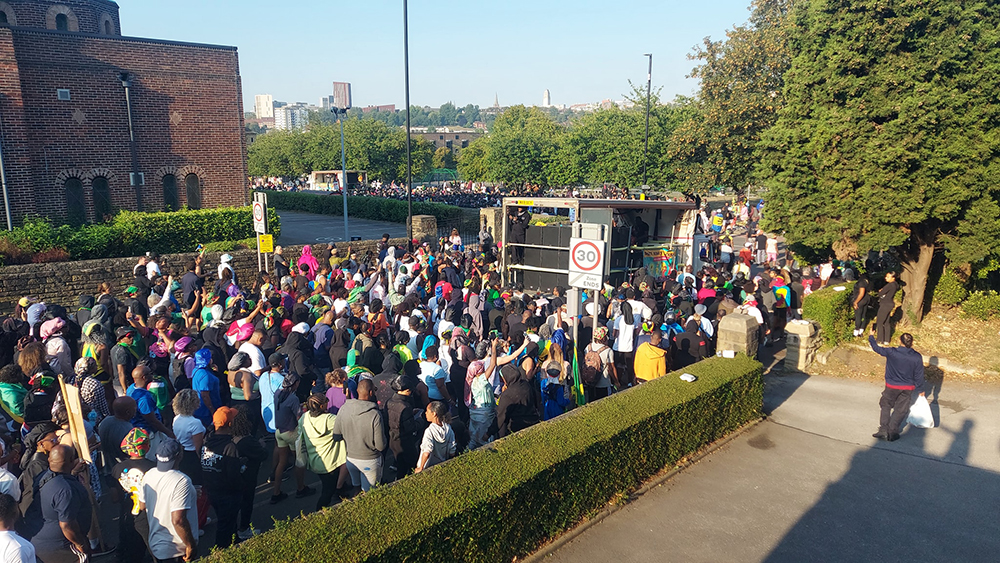
Monday saw the traditional Jouvert celebrations, a joyful early-morning street party that dates back to Caribbean carnival traditions. Starting before dawn, revellers danced through the streets covered in paint, powder and mud, accompanied by booming soca and calypso beats. Jouvert – from the French “jour ouvert”, meaning “daybreak” – symbolises freedom and new beginnings, and it remains one of the most vibrant and spirited elements of the Carnival.
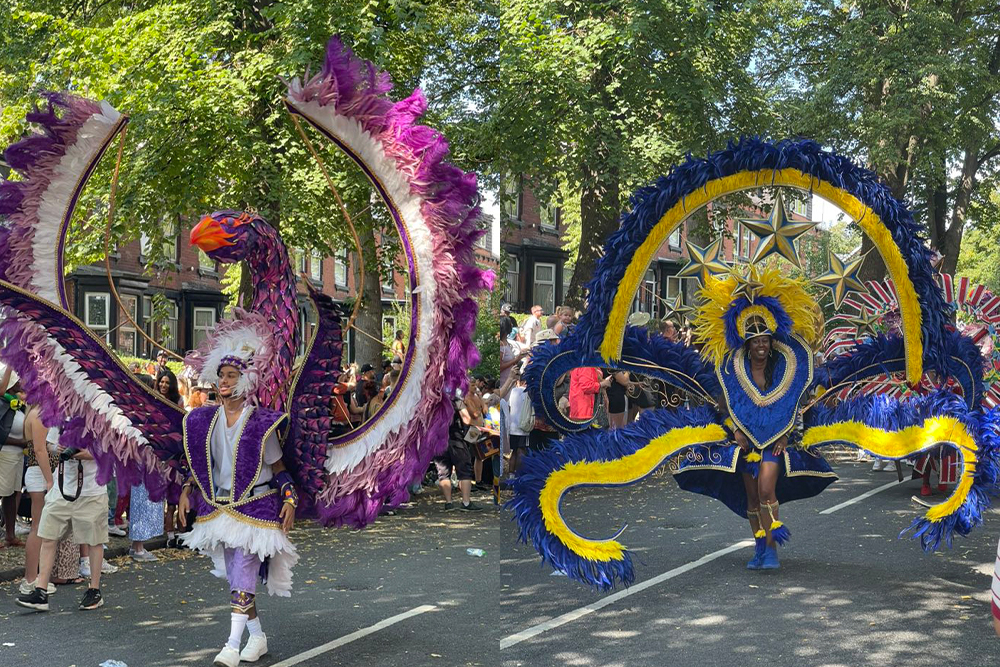
The grand parade followed later in the day, with hundreds of costumed performers showcasing elaborate feathered headdresses, sequined outfits and dance routines. Crowds lined the streets to cheer on the bands and soak up the carnival spirit.
However the Leeds West Indian Carnival is more than just a celebration.
Founder Arthur France, said that the true meaning of the carnival is fundamentally about emancipation . He said: “Unless you acknowledge emancipation, we are not going anywhere as a people. Most people do not know what emancipation means. It means to clear your mind from nonsense, self-determination, and coming together as a people.
“Though it’s a time of celebration and costume spectacle, our efforts to showcase our heritage and history will also highlight how the carnival’s African and Caribbean roots run deep across centuries. Its genesis is steeped in the emergence of a people from the cruelty of slavery into liberation and emancipation. That history is too important to be forgotten beneath the costume spectacle or with the passing of time.”
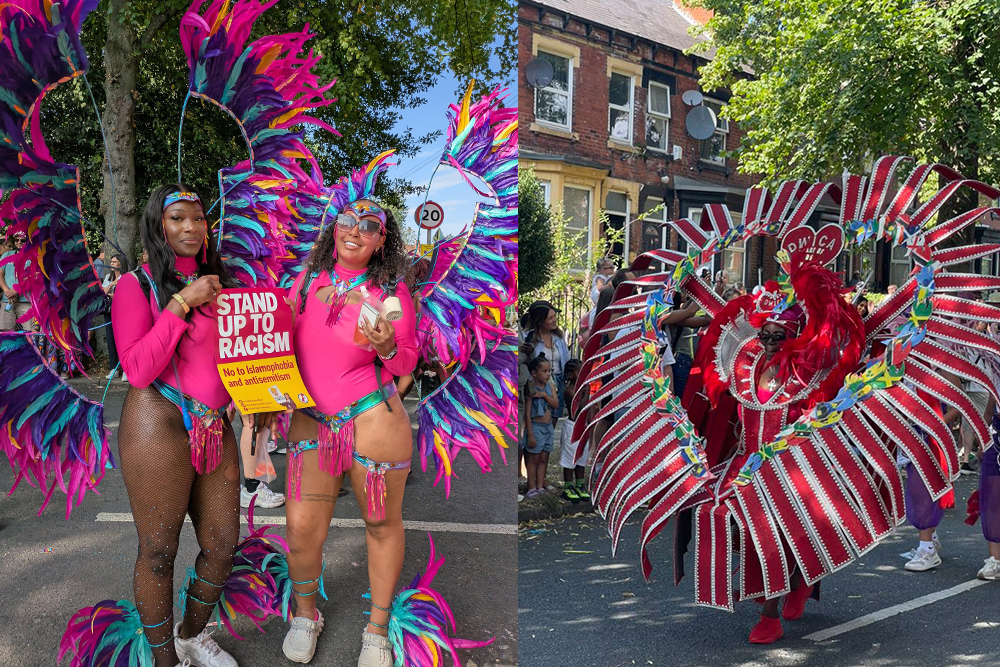
Beyond celebrating emancipation, many of the carnival’s masqueraders carried deeper messages, using their elaborate costumes and performances to highlight social issues, reflect political themes, or spark conversations about contemporary society. Some performances used costume and dance to confront racism, injustice, discrimination, and the legacies of colonialism, while others highlighted and celebrated the richness of Afro-Caribbean history and heritage.
As one of the UK’s oldest Caribbean carnivals, Leeds West Indian Carnival has been running since 1967 and is now a cornerstone of the city’s cultural calendar. More than just a spectacle, it celebrates Caribbean heritage while bringing people of all backgrounds together in joy and unity.
Support independent community journalism!
East Side Story covers the people, places and stories in Leeds that are too often overlooked. While national headlines chase conflict and clickbait, we focus on real communities and the issues shaping daily life in East Leeds.
Divisive content, AI noise and online rumours spread faster than ever. At the same time, many mainstream outlets are stretched and rarely spotlight the community organisations and local champions who deserve recognition.
East Side Story was created to change that. We answer only to our readers. We have no corporate owners or billionaire funders. Our journalists report freely, ask difficult questions and hold power to account.
Your support helps us keep this work going. Monthly contributions make the biggest impact because they allow us to invest in deeper reporting and fearless local journalism.
Supporters also receive exclusive updates, behind the scenes insights and other benefits as a thank you for keeping independent journalism alive.