Janine Griffiths
In East Leeds, an allotment site is quietly transforming lives, friendships and the natural world and its impact is growing as fast as the vegetables in its beds.
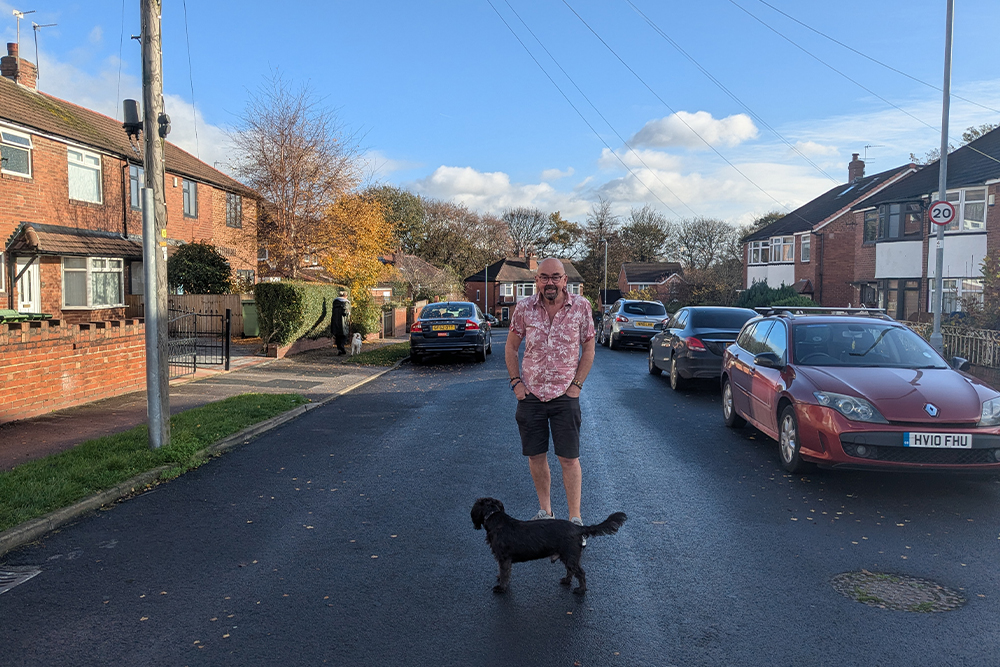
At Providence Pastures, part of Roots Allotments, Patch Manager Stuart Owen, known affectionately as ‘Spud’ has watched a community take shape around the simple act of growing food. For him, Providence Pastures is more than just an allotment.
It’s part of a wider effort in Garforth to build friendships, strengthen community ties and bring people from different backgrounds together.
“The growing is probably 60-70% of what we do. But the other thing is, drawing people of every background onto the site, to get them growing,” he explained, adding: “Once people start growing, they start asking questions, they start looking beyond their own garden… that’s when we start literally, pardon the pun, but we start growing a bit of a community.”

However, the site has become more than a social hub for those interested in growing food. It has also played a transformative role in the health and wellbeing of the members that go there.
Spud has watched lives shift in real time. People wander in carrying stress, grief or exhaustion, and leave lighter. He said: “Yeah, I’ve had people where they came to me with an absolute disaster, or in their eyes, it’s a disaster.
“But then within 20 minutes, we’ve talked about it, we’ve got a few tools out and a wheelbarrow, and the problems have gone, or we’ve got a resolve, turned it round, and they say, ‘I’m a different person’.”
The site is also growing increasingly popular among families in East Leeds, according to Spud.
“The site is such a safe place, and parents feel like it’s a safe place, which is really important,” he said, adding: “Children run freely while their parents garden, and friendships form naturally between people who might never have crossed paths elsewhere. We’ve got some really good friend groups started.”
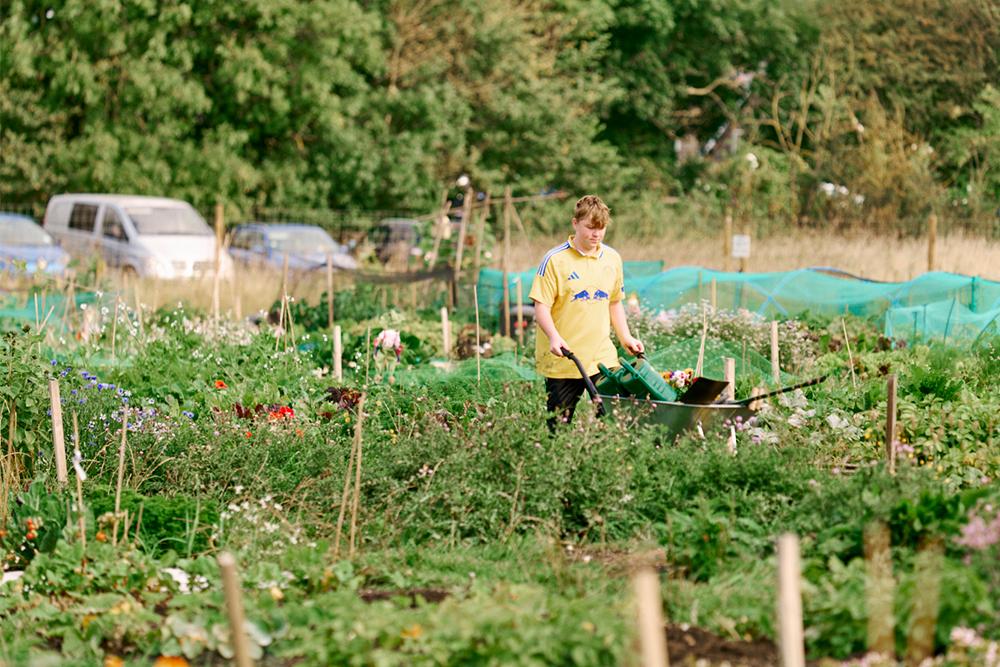
Yet this thriving hub wasn’t built by accident. Spud’s own journey into the role began when he took on a plot to recover from illness. What began as a way to get back on his feet grew into something life changing and he was eventually offered a role there and became the Patch manager.
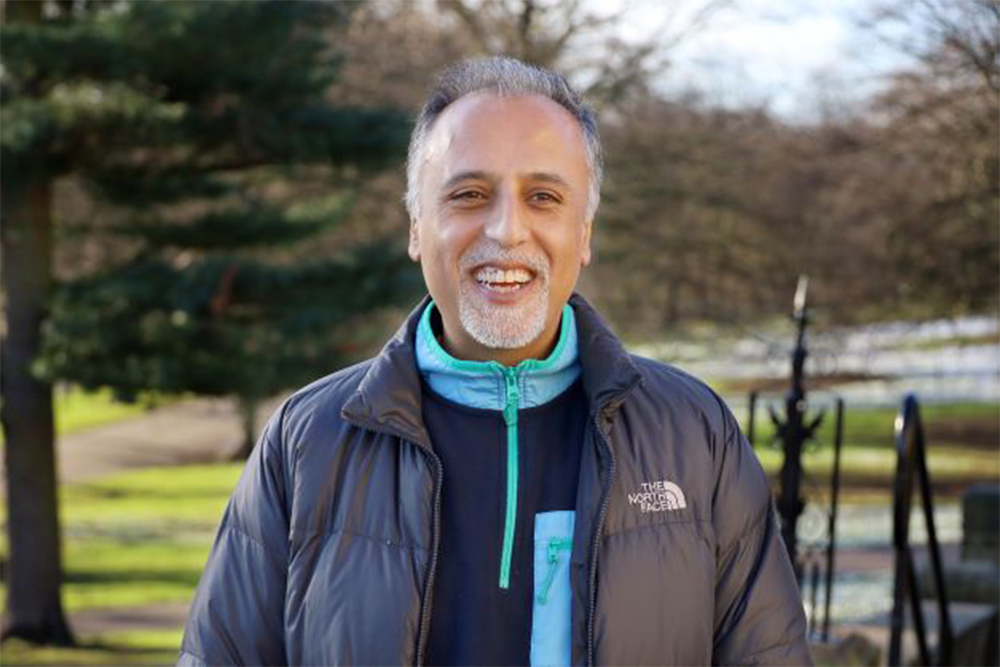
Ed Morrison, co-founder of Roots Allotments, understands that path well. For him, healing and horticulture are inseparable. He explained: “I was a really depressed person before I started growing food. Roots is a place of healing, a place of tranquillity. Getting outside, getting your hands in the soil gives people a sense of hope when there’s so much chaos and despair out there.”
Roots has a number of allotments all over the country, and adheres to a ‘no dig’ philosophy, which is a gardening and farming method that avoids disturbing the soil.
Instead of tilling, a layer of organic material like compost is placed on top, mimicking natural processes. This protects the soil’s living ecosystem, treating it as a vital organism rather than inert dirt.
Ed explained: “We put compost on top of the soil and then we don’t disturb what is below that. Over time, it has proven to have 15% higher yields than digging.
“If we don’t disturb the life in the soil and we treat it like this beautiful organism, instead of something that is considered as dirt that we can destroy, then we can actually build soil health and biodiversity, which will in turn give us higher yields, more nutrient dense food, and rebuild the sort of the loss of biodiversity that we’re currently seeing.”
“It’s sort of like a people’s direct answer to what the industrial agricultural system has created over the last 80 years through ploughing and spraying,” Ed explained, adding: “The use of chemicals is just appalling.
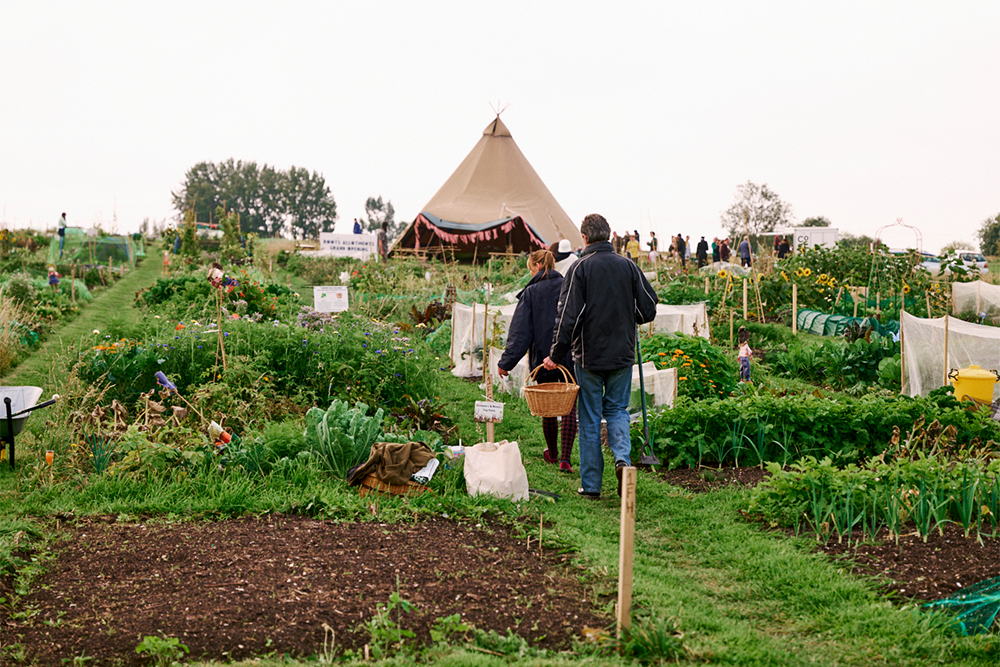
“They destroy all the good and the bad microbial health. If we’re spraying them on us, on our soils, then it’s basically destroying the good and the bad microbial health in our soils, which then might also have a wider ripple effect on biodiversity in general and the insects that land.”
The land itself is thriving too. Providence Pastures is home to wildlife that has coexisted with growers since the start. Spud noted: “I was amazed at how many owls were still there. I watched a kestrel hunting over two of the plots and picking up mice. We had red kites and buzzards as regularly as clockwork.”
For many in East Leeds, Providence Pastures is far more than an allotment. It is proving that in East Leeds, a vegetable patch can be a sanctuary, a classroom, a meeting place and a lifeline. Or, as Ed put it more simply, “These microcosms of growing… are beautiful spaces of healing.”