
 Janine Griffiths
Senior NHS leaders have visited a Leeds community centre to explore how bringing health, council and support services together can help local families access care more easily.
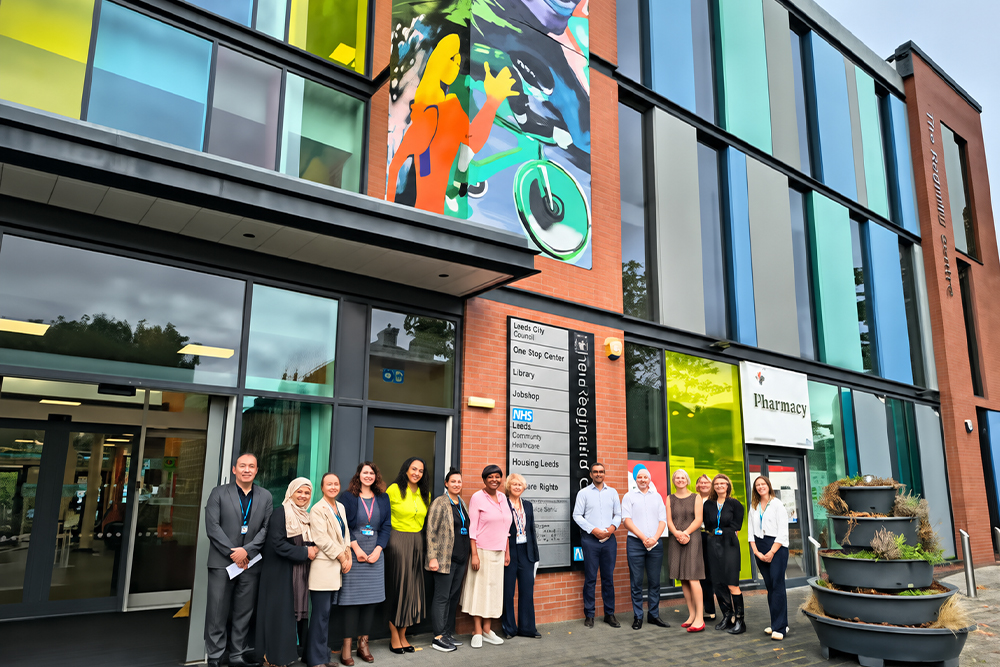
The visit to the Reginald Centre in Chapeltown took place last week, with senior NHS England representatives meeting healthcare professionals and community service providers.
Among those attending were NHS England chair Dr Penny Dash, non-executive director Ravi Gurumurthy and Chief Nursing Officer for England Duncan Burton.
The centre, which opened in 2010, offers a range of services in one location, helping residents access healthcare and practical support within their community.
These include GP practices, children’s mental health services, speech and language therapy, dental care and specialist clinics for children with additional needs.
Families can also access council services, housing assistance, employment support and the Family Hub.
Dr Melissa Tasou, clinical director of Chapeltown Primary Care Network (PCN), said: “It was a fabulous opportunity to showcase the passion and community spirit of Chapeltown.
“The Reginald Centre was built in 2010 and is a great example of the breadth of services that have evolved over the last 15 years around the needs of local people.”
The visit highlighted Leeds’ approach to neighbourhood healthcare, which encourages different organisations to work together rather than provide services separately.
Senior representatives from Leeds Community Healthcare NHS Trust, Leeds Teaching Hospitals NHS Trust, Leeds City Council and several other healthcare organisations hosted the visit.
NHS England representatives were shown how the different services operate together and discussed opportunities to introduce similar arrangements elsewhere.
Sam Prince, executive director of operations at Leeds Community Healthcare NHS Trust, welcomed the opportunity to demonstrate the city’s approach.
She said: “We were delighted to welcome NHS England colleagues to Leeds and showcase the strength of partnership working across our city.
“The Reginald Centre demonstrates what can be achieved when organisations come together around the needs of local populations. It was a valuable opportunity to share our learning as neighbourhood health continues to develop nationally.”
The centre also works alongside HATCH, a local care partnership connecting more than 250 voluntary, community, social enterprise and statutory organisations.
Dr Melissa Tasou, clinical director of Chapeltown Primary Care Network, explained that the centre was developed over 15 years in response to local needs.
She said the organisations involved work together to support patients and address challenges that can affect their health and wellbeing.
Nicola Nicholson, associate director for strategy and programmes at the West Yorkshire Integrated Care Board, explained that the city’s ambitions extend beyond medical treatment.
She said: “Our ambition is to create a truly joined-up system that wraps around the whole person, supporting individuals, families and communities with the right help at the right time, rather than responding only to individual health needs.”
The visit provided NHS England leaders with an opportunity to examine how Leeds is developing community-based healthcare, with services working together to support residents and families.
Support independent community journalism!
East Side Story covers the people, places and stories in Leeds that are too often overlooked. While national headlines chase conflict and clickbait, we focus on real communities and the issues shaping daily life in East Leeds.
Divisive content, AI noise and online rumours spread faster than ever. At the same time, many mainstream outlets are stretched and rarely spotlight the community organisations and local champions who deserve recognition.
East Side Story was created to change that. We answer only to our readers. We have no corporate owners or billionaire funders. Our journalists report freely, ask difficult questions and hold power to account.
Your support helps us keep this work going. Monthly contributions make the biggest impact because they allow us to invest in deeper reporting and fearless local journalism.
Supporters also receive exclusive updates, behind the scenes insights and other benefits as a thank you for keeping independent journalism alive.