
 Catherine Louise Turner
The 30th of April is usually a day for spring blossoms and the first real warmth of the sun. But in Micklefield and surrounding village communities, it’s a date that carries a century-old chill.
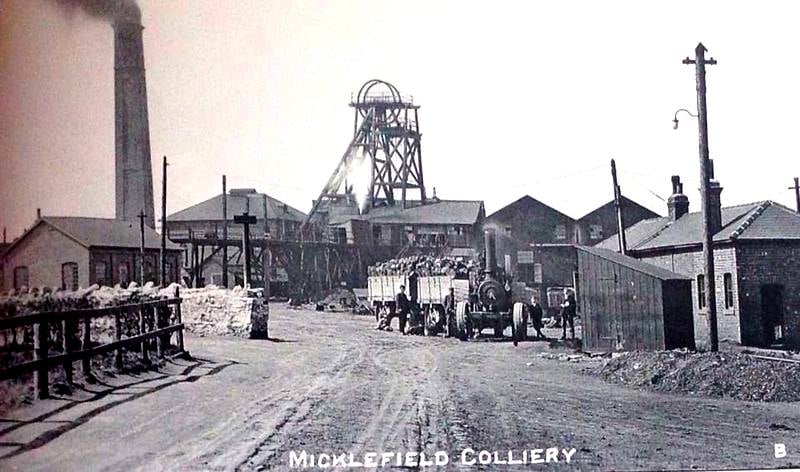
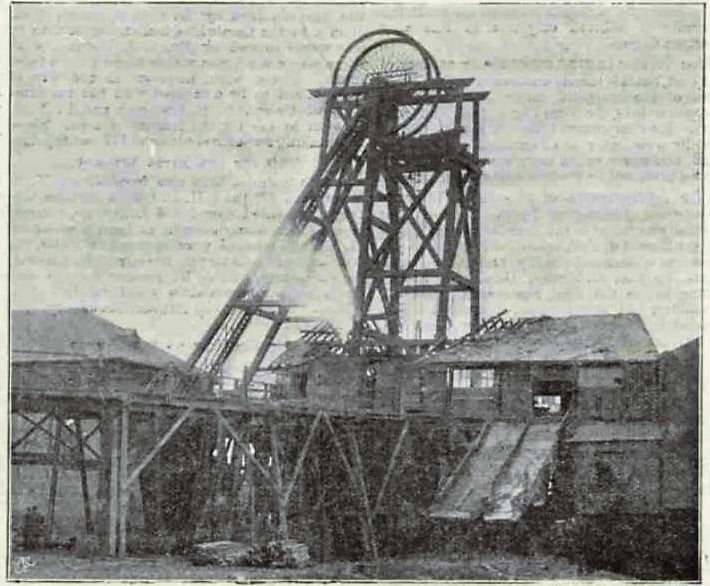
If you stand near the site of the old Peckfield Colliery today, it’s hard to imagine the roar that tore through the village at 07:20 back in the day of 1896. The villagers today are used to the hum of the A1(M) now, but 130 years ago, the sound that defined this landscape was a catastrophic explosion that claimed 63 lives in an instant.
A Candle in the Dark
The tragedy of Peckfield wasn’t just the scale; it was the simplicity of the cause. A single naked candle flame – the standard light for a miner at the time – met a pocket of firedamp, a natural, highly explosive gas (mostly methane). What followed wasn’t just a ‘gas pop’, a small, localised ignition of methane that most veteran, Victorians miners ignored. Firedamp acted like a detonator, a fuse which kicked up decades of dry, volatile coal dust from the ledges and floor, a coal dust explosion that turned the underground galleries into a high-pressure furnace. Needlessly to say, lives were ultimately lost.
As the bodies of the victims were slowly recovered, they were brought to the surface and carried directly to the Micklefield Miners’ Institute (later the Miners’ Welfare Club). The Institute was hastily cleared of its furniture to serve as a makeshift mortuary, as it was the only building large enough to house the sheer number of dead. In the days following the blast, the hall’s cheerful atmosphere was replaced by a grim, suffocating silence, broken only by the sobbing of families who walked between the rows of remains to identify their fathers, sons, and brothers by their boots or waistcoats.
The funerals, of the victims were one of the largest and most sombre events in the history of West Yorkshire. It took place on Sunday 3rd May 1896. This saw the village of Micklefield swell with an estimated 25,000 people mourners from across the Yorkshire coalfield. A procession of coffins stretched over a mile long, winding its way from the Miners’ Institute to St Mary’s Church. The scene was described by onlookers as a “river of black,” as the community followed the miners to their final resting place.
Many of these brave local miners, were laid to rest within the grounds of St Mary’s churchyard, Micklefield. I took it upon myself to visit their graves and pay my respects. As I walked through St Mary’s churchyard, the names on the memorial told the real story. It wasn’t just about the 63 miners, it was also encompassing to the families like the Bensons, who lost James (52), George (25), and Fred, only 14 years of age and the youngest child to die that morning. It was also the other young boys, who had tragically died like 16-year-old Samuel Godber and 17-year-old Elias Clark, whose lives ended before they had truly begun.
Stories, Survivors and Heroes: The Lives Reclaimed
Behind the tragedy comes incredible bravery. The 1896 disaster isn’t just a story of loss; it is built on human courage and self-sacrifice.
These acts of heroism are the “living stones” that are as enduring as the granite memorials standing in the churchyard today.
George Carter Cawood (The Triple Rescuer):
George, 30 was initially reported dead. After escaping the blast, he immediately went back underground to recover others. Although the area was filled with the “afterdamp” (poisonous gas), George who clearly didn’t have any concern for himself, descended three times to recover his fellow miners. He eventually suffered from afterdamp himself. George later became the licensee of the Swan Inn in Kippax.
John “Jack” Sissons: A Sherburn local who famously described the darkness and dust so thick he couldn’t see eventually stumbling over the body of his Deputy.
Robert Henry Nevins: A Deputy who kept his group of 11 terrified teenage boys calm in the pitch black and led them all to safety whilst encouraging them all to pray together.
George Whitehead: A pit lad since 13 and not on shift that day, George rushed to the colliery upon hearing the blast. He spent the day piling the bodies of men he knew personally.
John Charles Rhodes: A Sherburn-in-Elmet Solicitor and resident who turned the disaster into a site of hope by pinning a £5 note to a sheet of paper which in turn started a relief fund that eventually reached over £20,000 including a donation of £50 from Queen Victoria.
A Community Beyond Borders
While Micklefield was the heart of the disaster, the grief ripped across the entire district. The victims weren’t just locals; they walked to the pit from all over East Leeds and its neighbouring villages.
Micklefield: Most of the victims lived here including in the now-vanished rows like Bland’s Cottages.
Kippax: Families on the High Street and Well Lane were devastated, including the Bellerby brothers.
Garforth: Men travelling from Oxtoby Houses and nearby streets to work the Beeston Bed, the upper seam of the colliery.
Aberford and Newthorpe: Several victims, including some of the youngest pony drivers, called these villages home.
Other Villages: The toll extended to Sherburn-in-Elmet and Ledsham, with church bells tolling across the region to mark the loss.
The Weight of the Aftermath
We often talk about “industrial heritage” in East Leeds as if it’s just old bricks and museum pieces. But for Micklefield, the Peckfield disaster was a total community collapse. Overnight, dozens of women became widows and over a hundred children lost their fathers. The village didn’t just lose its workforce; it lost its heart.
In the aftermath, the Blands Arms Public House transformed into makeshift headquarters for the relief fund. People from across the country sent pennies to keep the village from starving. It was a moment of Victorian solidarity that we still see echoes of in our community spirit today.
Why We Still Remember
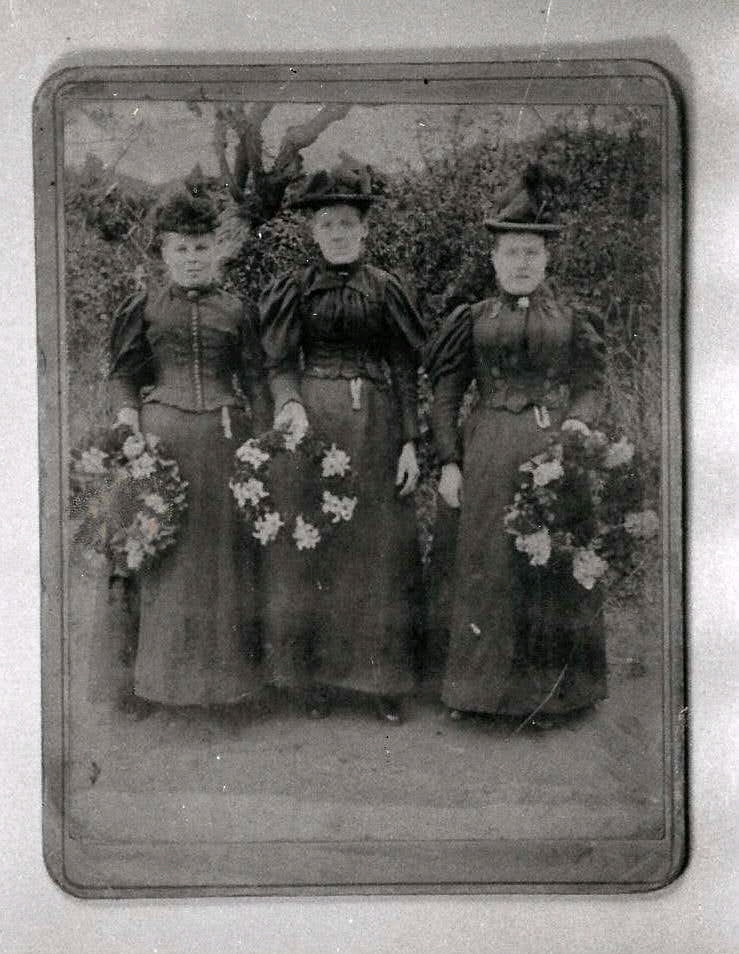
Why does East Side Story care about a 19th – century pit blast? Because the safety laws we take for granted today were written in the soot of Peckfield. It took 63 lives to finally prove that “naked lights” had no place in the pits.
Legislative Impact
While there was no immediate nationwide ban, the Peckfield disaster was a major catalyst for ending the use of candles and open-flame lamps in gassy mines. The disaster coincided with the Coal mines Regulation Act of 1896, which introduced stricter rules on the provision of safety lamps by owners of the pits. Following these recommendations, the colliery owners immediately replaced candles with Routledge Newcastle safety lamps for all miners.
For families and indeed for their descendants, the legacy is tied to this pivotal shift in mining safety that eventually made the “naked light” a thing of the past and in all probability, saved countless of lives in the years that followed.
Today, the physical heart of the mourning – the Micklefield Miners’ Welfare Club – is gone. The building that once held the weight of the village’s grief was eventually closed and demolished, with the site since transformed into a residential development. Also gone, is the colliery itself, replaced by houses and greenery. But if you look at the stones decorated by the children at Micklefield Primary School, or the gold horseshoes in the memorial garden, you realise that the village hasn’t forgotten. They still carry the light of the 63 souls who went into the dark.
The Memorials of Micklefield
The village serves as a reminder as a living museum to the events of 1896. If you wish to pay your respects, you can find the following tributes:
St Mary’s Churchyard Memorial: The primary monument to the 63 men and boys. Also, there is a plaque inside the church, dedicated to the widows who were left to raise 107 children and face an uncertain future.
Micklefield School Memorial Garden: A community space at the heart of the village featuring 63 stones decorated by schoolchildren with the miners’ names. Gold horseshoes are embedded here to commemorate the 19 pit ponies who died in the explosion. These four-legged miners – and the 4 brave pony survivors – will not be forgotten. Their story serves as a valuable lesson and a fitting tribute for the next generation.
Pit Lane Memorial: A dedicated marker stands on Pit Lane, near the original colliery entrance.
The Bland’s Arms Plaque: This is still in place in the now closed public house. This was a permanent plaque dedicated to the victims marking the pub’s role as the relief fund headquarters.
Micklefield Infants’ School Plaque: A memorial specifically dedicated to the orphans left behind in the disaster.
Lotherton Hall, Aberford: Home to the “Eye of the Miner” exhibition, featuring a commemorative banner with 63 knitted miniature miners and a woollen pit pony.
DIGITAL ARCHIVE: The Roll of Honour
(Listed with ages and home villages where recorded,)
Below is a refined Roll of Honour for the 63 men and boys who lost their lives in the Peckfield Colliery Disaster on 30th April 1896.
Noah Ball,35 (Micklefield), William Barker,39 (Micklefield), Fred Bellerby, 21 (Kippax), Harry Bellerby 19 (Kippax), Fred Benson, 14 (Micklefield), George Benson, 25 (Micklefield), James Benson, 52 (Micklefield), Elias Clark,17 (Micklefield), William Francis Dean, 37 (Micklefield), George Edwin Dunnington, 20 (Newthorpe), Francis Rainburd Edwards, 34 (Micklefield), Thomas Everett, 26 (Newthorpe), Samuel Godbur,16 (Micklefield), Edward Goodall, 42 (Garforth), Samuel Goodall, 57 (Aberford), George Hayes, 20 (Micklefield), William Herring, 31 (Micklefield), Arthur Howson,18 (Aberford), Joseph Jackson, 29 (Garforth), Walter Jackson, 27 (Garforth), Samuel James, 31 (Micklefield) Joseph Johnson, 47 (Micklefield), Thomas Longdon, 43 (Micklefield), Edwin Charles Maggs, 26 (Micklefield), Henry Martin, 59 (Micklefield), Herbert Martin, 29 (Micklefield), John Meakin, 36 (Micklefield), Job Millership, 52 (Micklefield), George Moakes, 53, (Micklefield), Charles Noble, 30 (Micklefield), Alfred Norton, 28 (Kippax), Thomas Oakley, 50 (Micklefield), Louis Pickard,19 (Kippax), William Radford, 56 (Micklefield), Rayner Scrimshaw, 27 (Garforth), William Sheldon, 33 (Micklefield), Charles Shepherd, 68 (Micklefield), Richard Shepherd, 30 (Micklefield), David Shillito, 53 (Micklefield), George Shillito, 59 (Micklefield), James Shillito,50 (Micklefield), Arthur Simpson, 24 (Garforth), George Simpson, 21 (Garforth), John Simpson, 26 (Garforth), William Richard WoodStead, 24, (Aberford), John Sutton,35 (Micklefield), Charles Swift, 36 (Micklefield), Henry Edward Tallett, 41 (Garforth), George Daniel Edwin Taylor, 25 (Newthorpe), William Varey, 48 (Micklefield), John Wallis, 48 (Micklefield), Robert Westerman, 38 (Micklefield), Amos Whitaker, 32 (Micklefield), George Henry Whitaker, 23 (Micklefield), Joseph Whitaker, 57 (Micklefield), William Naylor Whitaker, 39 (Micklefield), William David Wilks, 47 (Micklefield), Alfred Wilson,17 (Aberford), James Wilson, 29 (Kippax), Joseph Wilson,59 (Aberford), Herbert Winfield, 38 (Newthorpe), Joseph Winfield, 33 (Micklefield) and Walter Winfield, 23 (Micklefield).
The Silent Laborers
Also remembered are the 23 pit ponies, 19 that perished alongside their masters. In a stark contrast to how we treat animals today, these ponies lived almost entirely in the dark, only seeing the sun for two weeks of the year. Four ponies survived including one, miraculously found alive nearly two weeks after the blast. A small flicker of life that felt like a blessing to a village in mourning.
The Final Word
Total of men and boys in the pit: 105
Died: 63
Survived: 42
As the last of the 63 victims were laid to rest, the air was thick with a grief that words could barely touch. Perhaps the most profound reflection comes from the local reports of that immense funeral service.
“The village was a valley of tears, yet in the shared silence of the thousands who stood by the graveside, there was an abiding tribute: a solemn promise that those who went into the earth to light the fires of others would never themselves be left in the dark.”
Authors Note: This account holds a deeply personal and poignant significance for the author, whose own ancestor, George Daniel Edwin Taylor, fondly known as Dan, were amongst the victims lost in the Peckfield tragedy.
Support independent community journalism!
East Side Story covers the people, places and stories in Leeds that are too often overlooked. While national headlines chase conflict and clickbait, we focus on real communities and the issues shaping daily life in East Leeds.
Divisive content, AI noise and online rumours spread faster than ever. At the same time, many mainstream outlets are stretched and rarely spotlight the community organisations and local champions who deserve recognition.
East Side Story was created to change that. We answer only to our readers. We have no corporate owners or billionaire funders. Our journalists report freely, ask difficult questions and hold power to account.
Your support helps us keep this work going. Monthly contributions make the biggest impact because they allow us to invest in deeper reporting and fearless local journalism.
Supporters also receive exclusive updates, behind the scenes insights and other benefits as a thank you for keeping independent journalism alive.