
 Janine Griffiths
In a quiet corner of Chapeltown, Karen Williams is building something she long felt the city was missing. Her new shop, The Sanyan Collective, has been open just a month, but the idea behind it has been growing for years.
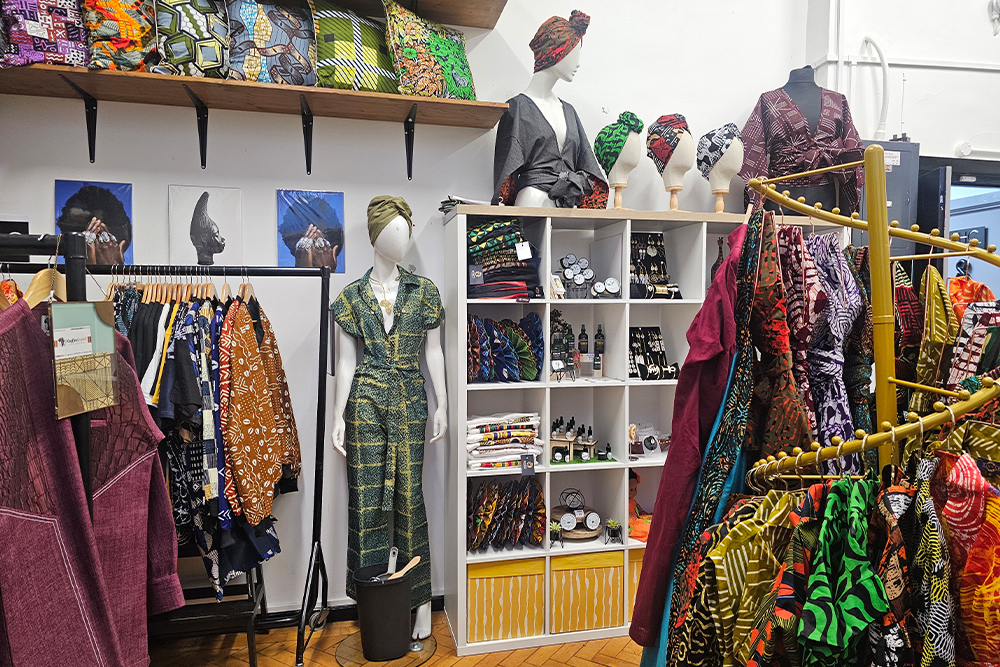
It brings together 11 black-owned brands under one roof, offering clothing, jewellery, skin creams, dolls and handmade accessories, all created by designers and artisans whose work rarely has a dedicated space in the city.
For Karen, a fashion designer who works with West African fabrics, this shop is far more than a retail unit. It is a space she dreamed of for years while travelling up and down the country selling her designs at markets and events. “People kept asking me, do you have a shop?” she said. “I never had a shop. I used to sell in shops, mostly in London, but I didn’t have my own space that I could kind of curate the way that I wanted it.”
Opening The Sanyan Collective meant carving out a home not just for her own brand, but for others who share her passion for creativity, culture and community. “When I came to Leeds, I realised that there was no space where you could go to buy items whether they’re accessories or clothes from black owned brands, and for people who make their own stuff as well,” she said. “I wanted to not just provide something for me, but also to bring other brands on board so that we’re all collectively rising together.”
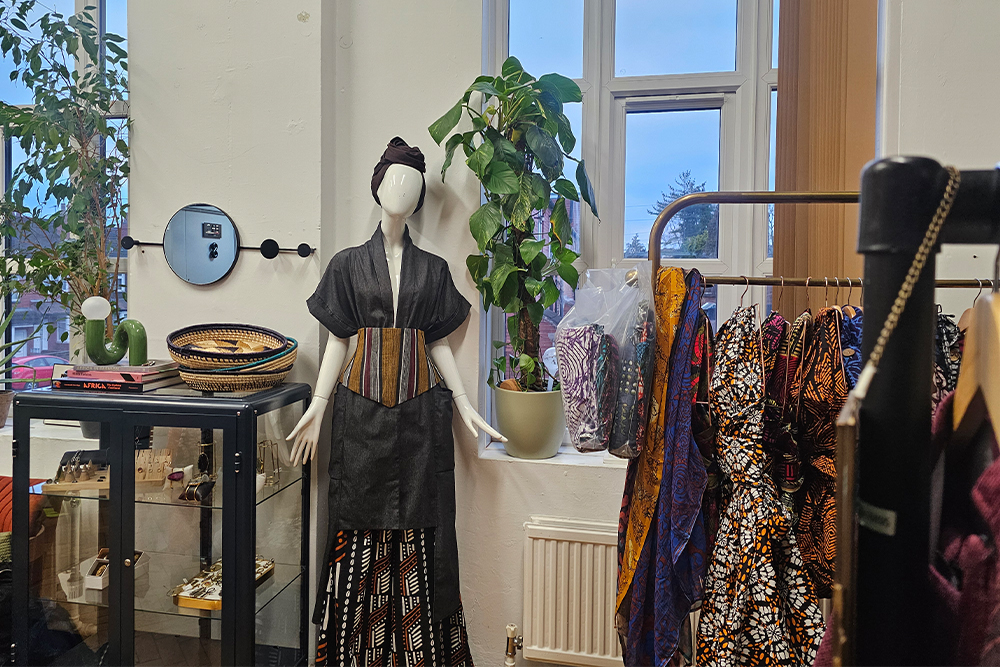
The collective now showcases makers from across Africa and the diaspora. Some source items from Senegal, Mali, Tanzania, Ghana and Uganda. Others craft everything by hand here in the UK. Karen wanted every brand to have a chance not only to sell, but to be seen, recognised and supported.
Karen’s own journey has taken determination and sacrifice. She ran her fashion brand for two and a half years before finally securing a space she could shape in her own way. “It’s expensive to set stuff up,” she said. “Getting anything funded and financed is hard, and so I’ve had to make a lot of sacrifices to make this happen. There hasn’t been anyone that says, here’s a pot of money go and do it.”
After years of running stalls at events like Africa Fashion Week London and smaller markets across the country, the physical demands also began to take their toll. “I was getting more and more tired, getting older,” she said. The shop became a way to grow without being constantly on the road.
But creating a collective brings a different kind of pressure. Karen is responsible for ensuring every brand feels included, respected and part of something meaningful.
She is determined that decisions are shared rather than imposed. “It’s not just like when you’ve got your own business normally you can just say, right, I’m going to do this,” she said. “I always have to take a step back and say, okay, let’s have a conversation first.”
Visibility is another challenge. The shop is tucked away from the main road and many people simply do not realise it exists. For now, growth depends on word of mouth and the slow, steady building of a customer base.
Despite the pressures, she believes in the power of shared skills, shared space and shared purpose. “The collective is really about bringing together everybody’s gifts,” she said. “I always believe people are stronger together.”
She hopes The Sanyan Collective will eventually become a community hub, not just a shop. Karen plans to host workshops in everything from jewellery making to simple sewing, as well as sessions aimed at new entrepreneurs who need guidance on starting out. “I wish I had somebody to tell me the basics,” she said. “Now I’ve got the basics. I’d like to tell other people the basics.”
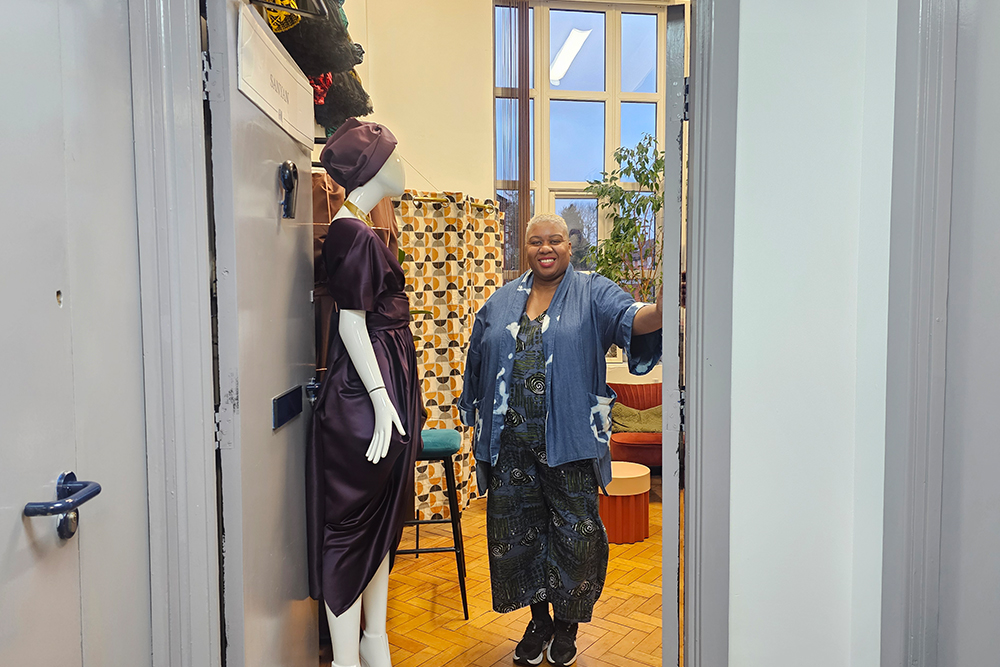
Her own fashion label reflects her values too. She designs what she calls “fluid fit” pieces that change with a woman’s body. “I want to design clothing that adapts with you,” she said. Whether someone moves from a size 10 to a 12, or from a 20 down to an 18, or is simply dealing with bloating during menopause, she believes clothing should still fit, still feel comfortable and still offer confidence.
Her use of African print fabrics is also deeply personal. “As a Caribbean woman, I feel sometimes I’m an anomaly in the space,” she said. She didn’t grow up with the fabrics and traditions many African designers reference. “Through slavery, I lost that connection with my roots,” she said. Reclaiming that heritage through colour, pattern and textile has become part of her creative identity.
Karen, who is 55, wants people to see her story not as a tale of certainty or perfection, but of persistence and courage. Her message to others is clear: “Just go out and do the things that you’re passionate about, the things you want to do,” she said. “Do as much as you can do with what you have.”
She believes fear, doubt and hesitation hold too many people back.
And for anyone at the start of their journey she offers the same words once given to her, adding: “Just take the first step and just keep going. Be relentless. Don’t let things that happen stop you from going on that journey, because at the end of that journey is your joy.”
Support independent community journalism!
East Side Story covers the people, places and stories in Leeds that are too often overlooked. While national headlines chase conflict and clickbait, we focus on real communities and the issues shaping daily life in East Leeds.
Divisive content, AI noise and online rumours spread faster than ever. At the same time, many mainstream outlets are stretched and rarely spotlight the community organisations and local champions who deserve recognition.
East Side Story was created to change that. We answer only to our readers. We have no corporate owners or billionaire funders. Our journalists report freely, ask difficult questions and hold power to account.
Your support helps us keep this work going. Monthly contributions make the biggest impact because they allow us to invest in deeper reporting and fearless local journalism.
Supporters also receive exclusive updates, behind the scenes insights and other benefits as a thank you for keeping independent journalism alive.