
 Janine Griffiths
More than 100 Black women packed into a conference room in Leeds to confront the systemic failures that have left Black women feeling unprotected.
This landmark event has laid bare the trauma, frustration and determination underpinning efforts to tackle racism, hate crime and violence against women in Leeds.
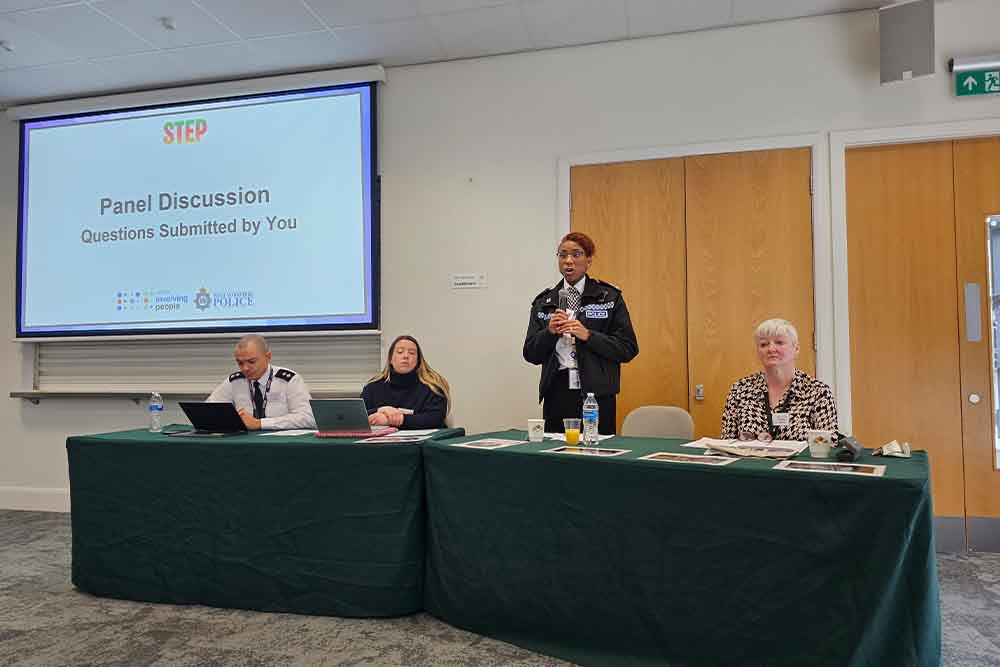
The Conference for Women of Black Heritage took place at Bridge Community Church last week and was hosted by community organisation Leeds Involving People in partnership with West Yorkshire Police (WYP).
It featured a number of speakers and panelists, which included Tanya Wilkins, detective chief superintendent, Beverley Adams, Principal Community Engagement Officer for West
Yorkshire Police and representatives from the Suzy Lamplugh Trust. The meeting was chaired by Sharon Burke, CEO of Leeds Involving People.
For Detective Chief Superintendent Tanya Wilkins, the day carried a deep personal significance. Wilkins, who is herself a Black woman, spoke candidly about the hidden toll of the “strong Black woman” archetype. “Change for me is deeply personal, because we often celebrate Black women as strong, unbreakable, unshakable, resilient beyond measure, but no one ever asks us what that strength has cost us,” she told the room. “Behind that strong black woman is a reality many of us know far too well, because our pain has often gone unseen and unprotected, and that’s why today matters, because strength should never mean silence.”
There was also significant concern about the government’s change to the way hate incidents are recorded. On the day of the conference, the government had announced that non-crime hate incidents would no longer be reported. Many questions were asked about the potential implications this had to the way hate crime incidents against black women were dealt with.
Tanya explained that the change only applies to non-hate crime incidents where a person perceives that something may have happened because of their protected characteristics but without there being any evidence of motivation. However, the new law does not apply to hate crimes, where the intent is clear. Tanya explained: “To make it clear, there is no change to hate crimes. Race and religion will still remain the most prominent categories, because there has been no change to hate crime legislation. The change only applies to non-crime hate incidents. Hate crimes are still hate crimes.”
She added that the police will consult with local communities to determine the impact of this new directive.
The conference also highlighted some of the top safety concerns facing black women today, including domestic violence, institutional racism, harassment and reporting crimes. The emotional weight of the day was balanced by a focus on accountability and the rebuilding of trust between Black communities and the police. Many of the attendees spoke about their own experiences of facing racism and violence, and their skepticism about reporting these incidents.
Principal Community Engagement Officer Bev Adams acknowledged the deep-seated skepticism many in the room felt. She explained: “Trust cannot be assumed; it must be rebuilt through honesty, cultural understanding, and genuine accountability.“By creating spaces where Black Heritage Women are heard without judgment, policing can begin to repair long-standing harms and build relationships rooted in respect and transparency.”
The discussion often veered into the trauma of reporting racism. Audience member Natasha Logan described the process as an “exhausting” battle. “It shouldn’t even be called reporting,” Logan said. “It should be called fighting, because you are fighting to be heard, fighting to have an influence, fighting to be taken seriously and for somebody to be held accountable.”
Councillor Abigail Marshall Katung, former Lord Mayor of Leeds said that the conference was long overdue and urgently needed. She said many women were carrying deep-seated concerns about rising hostility and violence. “This conference has been interesting and very important and about time as well,” she noted, adding: “The highest reported incidences of hate crime in this city is race and religion. So that shows you how important this conference is. A lot of us are very, very disturbed, concerned and worried about violence against women, specifically black women.”
The conference also included a powerful session on street harassment, led by the Suzy Lamplugh Trust. It focused on practical ways everyday people can step in safely if they witness someone being harassed or intimidated in public. A key takeaway was the “5 D’s” of bystander intervention: Distract, Delegate, Document, Delay, and Direct.
Each approach offers a simple way to help in different situations – Distract involves interrupting the situation to defuse tension (for example, asking for directions), Delegate means getting help from others such as staff or authorities. On the other hand, Document refers to safely recording what’s happening as evidence, Delay is about checking in with the person afterwards to offer support, while Direct involves calmly addressing the behaviour if it feels safe to do so.
Sharon Burke, CEO of Involving People, said this was “only the first step.”
“I want as many black women’s voices to be heard as possible,” she explained. During the conference, she also encouraged attendees to take part in “conversation cafés” which are small, informal community sessions where people can share their experiences and provide feedback on how the police engage with local communities.
Sharon added that the event is intended to be a “springboard” for change, with plans for ten listening circles across Leeds to continue the conversation. Reflecting on her 40 years of activism, she remained defiant: “If you’re not living on the edge, you’re taking up too much space.”
Support independent community journalism!
East Side Story covers the people, places and stories in Leeds that are too often overlooked. While national headlines chase conflict and clickbait, we focus on real communities and the issues shaping daily life in East Leeds.
Divisive content, AI noise and online rumours spread faster than ever. At the same time, many mainstream outlets are stretched and rarely spotlight the community organisations and local champions who deserve recognition.
East Side Story was created to change that. We answer only to our readers. We have no corporate owners or billionaire funders. Our journalists report freely, ask difficult questions and hold power to account.
Your support helps us keep this work going. Monthly contributions make the biggest impact because they allow us to invest in deeper reporting and fearless local journalism.
Supporters also receive exclusive updates, behind the scenes insights and other benefits as a thank you for keeping independent journalism alive.